Let’s just answer it up front. Yes. A website matters, and in 2026 it matters more than it did even a couple of years ago. But “yes” on its own isn’t useful to you, because the real question underneath isn’t whether you need one. It’s why, and what kind, and whether the money is actually worth it for a business like yours. So let’s get into that instead of just nodding along.
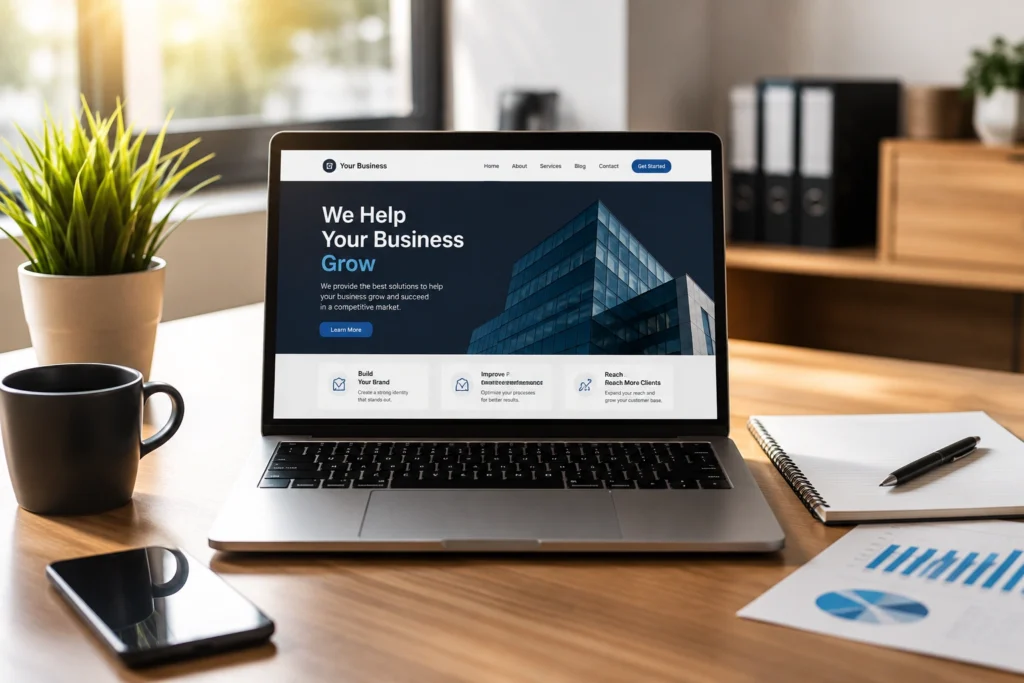
Here’s the thing most people miss. A website isn’t a digital business card anymore, something you set up once and forget. It’s working while you sleep. Someone in a different time zone finds you at 2am, reads about what you do, decides whether to trust you, and either reaches out or moves on to a competitor. All of that happens without you in the room. So when someone asks is a website important for business, what they’re really asking is whether they can afford to keep losing those quiet 2am decisions to the business down the street that did build one.
This guide walks through the honest answer, the numbers behind it, and what separates a site that earns its keep from one that just sits there.
The Short Answer, and the Numbers Behind It
So, is it worth having a website for your business? In almost every case, yes, and the data isn’t subtle about it. As of 2026, roughly 83% of small businesses in the US have a website, up from around 73% just a year earlier. That jump matters. It means the businesses without one aren’t just missing an opportunity anymore, they’re increasingly the odd ones out, and customers notice.
Consider how people actually shop now. Something like 81% of customers research online before they commit to a purchase, even when they end up buying in person or over the phone. If you’re not findable during that research phase, you’re often eliminated before you ever knew you were being considered. That’s the quiet cost of not having a presence. It isn’t dramatic. It’s just a steady leak.
And it’s not only about being found. It’s about being believed. 75% of consumers admit they judge a company’s credibility based on its website design. Think about your own behavior for a second. You land on a site that looks like it was built in 2009, loads slowly, and breaks on your phone. Do you trust that business with your money? Most people don’t, and they’re gone in seconds.
Why Is It Important to Have a Website? Trust Comes First
If I had to pick the single biggest reason, it’s trust. Building trust the old way is slow and expensive. A website shortcuts a lot of that, giving people a place to verify that you’re real, that you know what you’re doing, and that other people have worked with you and come away happy.
This is where understanding why is it important to have a website goes beyond the obvious “everyone has one” reasoning. Your site is where the proof lives. Testimonials from real clients. Case studies showing actual results. Credentials, certifications, the work you’ve done. For a law firm or a healthcare practice especially, where someone is handing you something sensitive, that proof isn’t a nice-to-have. It’s often the deciding factor between you and the next name on their list.
The trust numbers back this up in a way that’s hard to argue with. 87% of consumers say they’re willing to pay more for brands they trust. And 79% now trust online reviews as much as a personal recommendation from someone they know. Your website is where all of that, the reviews, the proof, the professional polish, comes together in one place that you control. Which brings up something people forget.
You Own It, Unlike Everything Else
Here’s a point that doesn’t get made enough. Your social media accounts aren’t yours. Not really. The platform owns them, sets the rules, changes the algorithm whenever it wants, and can suspend or ban an account with no warning and no real appeal. Plenty of businesses have built an audience on a platform only to watch it vanish overnight when something changed on the back end.
A website is different. You own it. You decide how it looks, what it says, how people move through it, and what happens to the data it collects. Social media is rented ground. Your website is land you actually hold the deed to. That distinction becomes a lot more obvious the first time a platform burns someone you know.
Why Every Business Needs a Website, Broken Down
The case for why every business needs a website really comes down to a handful of things a good site does that nothing else does quite as well. Not in a tidy identical list, because they don’t all carry the same weight, but here’s the honest breakdown:
- It works around the clock. No employee does that. Your site answers questions, shows your work, and captures leads at hours when your office is dark and everyone’s asleep.
- It levels the field. A small, well-built site can look every bit as credible as a much bigger competitor’s. Online, the polish of your presence matters more than the size of your team.
- It feeds everything else. Every ad you run, every social post, every email, all of it points somewhere, and that somewhere should be a site you control rather than a profile you rent.
- It’s measurable in a way nothing offline is. You can see exactly how many people visited, what they read, where they dropped off, and what made them reach out. Try getting that from a billboard.
That last one tends to surprise business owners who came up on traditional advertising. With a website, you stop guessing. You actually know what’s working, which means you stop pouring money into what isn’t.
What About Mobile? It’s Most of Your Traffic Now
One thing worth its own mention, because so many sites still get it wrong. Mobile devices made up about 52% of global website traffic in early 2026, and in plenty of industries it’s well over 60%. If your site was designed for a desktop and just kind of squished down to fit a phone, more than half your visitors are getting the bad version.
A site that forces people to pinch and zoom, that hides the phone number, that takes six seconds to load on a cell connection, is actively pushing away the majority of the people trying to reach you. Mobile-first isn’t a trend anymore. It’s just where your customers are. Whether is a website important for business has a strong answer for you partly depends on whether that site actually works in the place people are viewing it, which is increasingly a phone in someone’s hand on the couch.
The Cost Question, Honestly
Let’s talk about the part everyone’s actually wondering about. Is it worth the money? Because a website isn’t free, and a good one isn’t cheap.
Here’s how I’d frame it. A website is one of the few business expenses that keeps working long after you pay for it. A run of ads stops the day you stop paying. A trade show booth is gone when the event ends. A well-built website keeps generating inquiries for years, ranking in search, building trust, and capturing leads while you focus on running the business. Spread the cost across the years it keeps working and it tends to be one of the cheapest customer-acquisition tools you’ll ever buy.
The flip side is real too, and worth saying plainly. A cheap, badly built site can hurt you more than no site at all, because it puts a poor first impression in front of exactly the people who were interested enough to look. So the question isn’t really “should I spend money on a website.” It’s “should I spend it well.” Those are very different questions with very different outcomes.
So, Is A Website Important For Business in 2026?
Pulling it together: yes, clearly, and the gap between businesses with a strong site and those without keeps widening. When someone asks why a website matters for business, the honest answer in 2026 is that it’s no longer optional for anyone who wants to be taken seriously and found by the people looking for what they offer.
But the more useful version of the answer is this. A website is important, and a good one is what actually matters. The bar has moved. A site that exists isn’t enough anymore when 83% of your competitors also have one. What sets you apart is a site that’s fast, that earns trust in the first few seconds, that works on a phone, and that’s built around turning a visitor into a customer rather than just looking nice. That’s the real answer to whether is a website important for business, and it’s why we do what we do.
Let’s Build One That Actually Earns Its Keep
If you’ve been on the fence, or if you’ve got a site that’s quietly underperforming and you can feel it, that’s worth a conversation. Not a sales pitch. Just an honest look at where you stand and what would move the needle.
At DesignFxPro, we build websites for businesses that want their site to do real work, law firms, clinics, e-commerce brands, service companies. We start by understanding what you actually need before we recommend anything, because the right site for a solo law practice isn’t the right site for a growing online store.
Book a free consultation with DesignFxPro. We’ll tell you honestly whether a new site or a rebuild makes sense for you, and what it would take to get there.